Childbirth Education Classes on Long Island
Small-group and private classes at our Hewlett birth center, for families across Nassau County and Long Island.
Birthing Center Long Island
What Our Childbirth Classes Cover
Preparing for birth is easier when you know what to expect. Our childbirth education classes on Long Island cover the practical side of labor, birth, and the first weeks at home, so you go into your birth with a clear picture rather than a set of unanswered questions.
We teach six classes at our Hewlett birth center: prenatal yoga, lactation support, hypnobirthing, Lamaze, newborn care, and water birth preparation. You can take one, take several, or take the ones that fit what you are planning. Most families take two or three.
Classes are open to anyone preparing for a birth in Nassau County and the surrounding area, whether or not you are receiving care with us.
OUR CLASSES
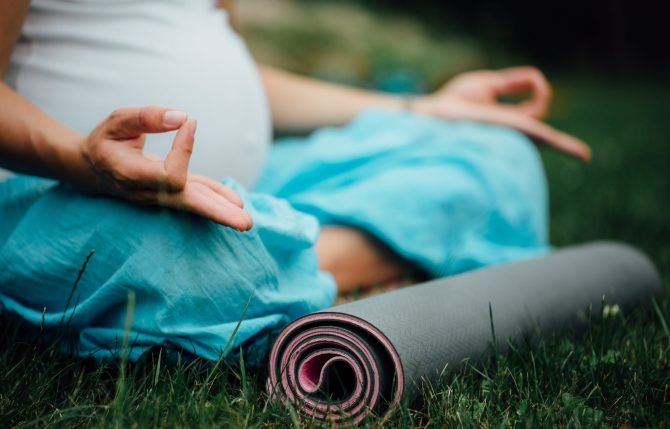
Prenatal Yoga
Prenatal yoga uses gentle stretching, breathing, and relaxation to help you stay comfortable and mobile through pregnancy. Movement and breath control are also two of the most useful things you can bring into labor, so this class does double duty.
What the class covers:
- Positions that ease back, hip, and pelvic discomfort
- Breathing you can use during contractions
- Building the strength and flexibility that make position changes in labor easier
- Relaxation techniques for the last weeks of pregnancy
Many people find that regular prenatal yoga helps them sleep better and feel less tense, though how much it helps varies from person to person. Let your midwife or physician know you are attending, particularly if you have any pregnancy complications.
Lactation Support
Our lactation class covers what actually happens in the first days and weeks of feeding, and what to do when it does not go the way you expected.
What the class covers:
- Latch and positioning, and how to tell when it is working
- What normal early feeding looks like, including frequency and cluster feeding
- Milk supply, and the common reasons it is misjudged
- Sore nipples, engorgement, and when to ask for help
- Pumping and returning to work
Taking this class before the birth tends to be more useful than waiting until you need it. If feeding is difficult afterward, we can also arrange one-to-one support.

Hypnobirthing
Hypnobirthing teaches deep relaxation, focused breathing, and self-hypnosis techniques for use during labor. The approach is built around reducing tension and fear, on the basis that a body that is not braced against contractions tends to cope with them more easily.
What the class covers:
- Guided relaxation and self-hypnosis practice
- Visualisation and focus techniques
- Breathing patterns for each stage of labor
- How your partner can support you and hold the room calm
People respond to hypnobirthing differently. Some find it becomes the centre of how they cope in labor, and others use one or two techniques alongside other comfort measures such as movement and warm water. Both are normal.
Lamaze Classes
Lamaze is the most complete of our classes and the one to take if you are only taking one. It walks through labor and birth from the first contraction to the first hour with your baby, and it covers your options rather than promoting a single approach.
What the class covers:
- The stages of labor, and what each one actually feels like
- Breathing and relaxation for each stage
- Comfort measures including movement, position changes, counter-pressure, and water
- Birthing positions and when each one helps
- Pain relief options, both with and without medication
- How your partner or support person can help
- Writing a birth plan that stays useful when labor changes course
- How your partner, support person, or doula support can help
Lamaze does not push you toward or away from medication. It gives you enough information to make decisions as labor unfolds.

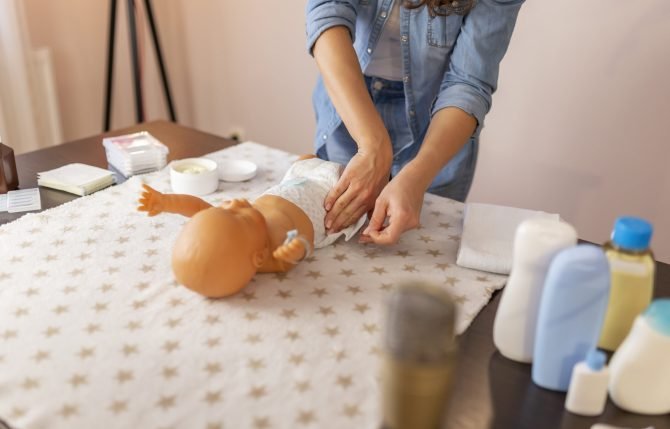
Newborn Care
The newborn care class covers the first few weeks at home, which is the part most people feel least prepared for.
What the class covers:
- Bathing, diapering, cord care, and handling a newborn safely
- Soothing, sleep patterns, and what is normal in the early weeks
- Feeding cues and how to tell your baby is getting enough
- Signs that mean you should call, and who to call
- Safe sleep practice
- What recovery looks like for you, and when to ask for help
Coming to this class with your partner or whoever will be at home with you tends to be more useful than coming alone. The class also covers what to watch for in the early weeks and when to get in touch. Our pediatric care team sees babies from the first days at home.
Water Birth Preparation
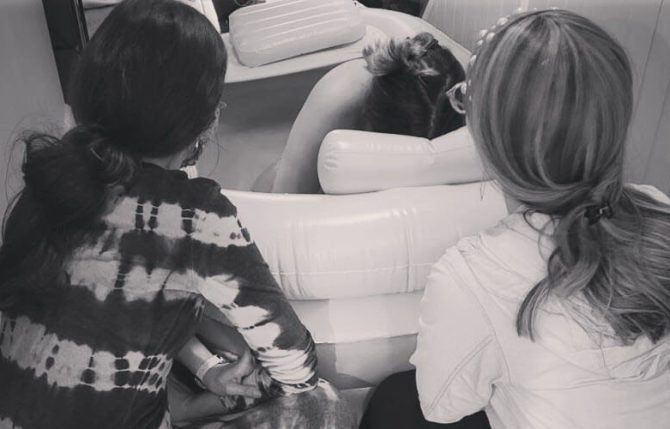
If you are considering laboring or giving birth in water, this class covers how it works here and helps you decide whether it suits you.
What the class covers:
- What the tub in our birth suites is like, and how it feels to labor in it
- Positions that work well in water, and how to move between them
- How your midwife monitors you and your baby during water immersion
- The circumstances in which you would be asked to leave the tub, and why that is a normal part of a well-run water birth
- How your partner can support you from the edge of the tub or in the water with you
- What happens immediately after the birth
Our water birth goes through the current guidance from ACOG, ACNM, and other bodies in detail, including where their positions differ. Reading it before the class is a good use of twenty minutes.
Which Class Is Right for You
Most people do not need all six classes. Here is how they tend to fit together.
If you are having your first baby and want one class that covers everything, take Lamaze. It is the broadest of the six and the best foundation.
If you already know you want an unmedicated birth and want a specific method to work with, take hypnobirthing. Many people take it alongside Lamaze rather than instead of it, since the two cover different ground.
If you are planning to labor or give birth in water, add water birth preparation. It is short and specific to our suites.
If this is not your first baby, you may want only the classes that address what was hard last time. That is often lactation support or newborn care rather than labor preparation.
Prenatal yoga is not a birth class in the same sense. It runs through pregnancy rather than as preparation for a single event, and it works well alongside any of the others.
Newborn care and lactation support are worth taking before the birth even though they cover what happens afterward. Learning them at three in the morning with a newborn is considerably harder.
If you are not sure, ask us. We would rather talk it through than have you book a class that is not the right fit.
How Classes Work
Class format and length
Classes are held in person at our birth center at 1512 Broadway in Hewlett. Each class runs as a single session of about two hours, and the Lamaze course runs as a series of four weekly sessions.
Private one-to-one classes are available if the schedule does not work for you or you would rather cover the material at your own pace. Fees are listed on our class schedule, and classes are included at no additional cost for families receiving prenatal care with us.
When to enroll
Most people start childbirth education between 28 and 34 weeks, so the material stays fresh through to labor without leaving you to travel to classes when you are least comfortable. Prenatal yoga is different and can be started earlier, since it runs alongside your pregnancy rather than preparing you for a single event.
Classes fill several weeks ahead, so it is worth booking as soon as you know which ones you want. If you are already past 34 weeks, get in touch anyway. A private session can usually be arranged on shorter notice.
Who can attend
Classes are open to anyone preparing for a birth in the area, whether or not you are receiving care with us. You are welcome even if you are planning to birth at a hospital.
- Your partner or support person is included in the class fee and encouraged to attend.
- Group classes are capped at eight families so there is room for questions.
- Second and third time parents are welcome, and often take only the classes that address what was hard last time.
- Wear something you can move in. Yoga mats are provided for prenatal yoga, though you are welcome to bring your own.
Who Teaches Our Classes
Our childbirth education classes are taught by Judy Ribner, DNP, CNM, the founder of Birthing Center Long Island.
Judy is a Doctor of Nursing Practice and a Certified Nurse Midwife, licensed in New York State. She founded our midwifery practice in 2020 and writes regularly on labor, birth positions, and physiologic birth.
That matters more than it might sound. A hospital class is usually taught by an educator you will not see again. Here, the person teaching you about labor is a midwife from the practice that will care for you, in the same building where you will give birth. You can ask her what actually happens in our rooms and get a direct answer.
The midwives you will meet
Alongside Judy, our clinical team cares for families through pregnancy, birth, and the weeks afterward. Each midwife is licensed in New York State and holds advanced training in obstetrical emergencies and newborn resuscitation.
- Malki Schuler, MSN, CNM, C-EFM, LCCE Certified Nurse Midwife, Lamaze Certified Childbirth Educator
- Marisol Montoya, CNM Certified Nurse Midwife
- Laila Morgan, CNM Certified Nurse Midwife
If you take classes with us and birth with us, there is a good chance the person teaching you will be one of the people at your birth. You can read more about our team.
Where Classes Are Held and Who We Serve
Classes are held in our birthing suites at 1512 Broadway in Hewlett. Not a conference room, not a hospital classroom. The same rooms where you will labor and give birth.
That changes what a class can do. When we talk about positions for labor, you can try them on the bed you will use. When we cover water birth, you are standing next to the tub. By the time you arrive in labor, the room is already familiar, which is one less thing to absorb on the day.
We are a short drive from Woodmere, Lynbrook, Valley Stream, Cedarhurst, Lawrence, and Rockville Centre, and families come to us from across Nassau County and western Suffolk. Some travel from Queens and Brooklyn as well, though the center itself is on Long Island rather than in the city. If you would like to see the rooms before you book a class, you are welcome to schedule a tour.
Childbirth Class Questions We Hear Most
When should I start childbirth classes?
Most people start childbirth education somewhere between 28 and 34 weeks. That keeps the material fresh through to labor without asking you to travel to classes when you are least comfortable. Prenatal yoga is the exception and can be started earlier, since it runs alongside your pregnancy rather than preparing you for a single event. If you are already past 34 weeks, get in touch anyway and we will find something that works.
Do I have to take all six classes?
No. Most families take two or three. Lamaze is the broadest single class and covers labor and birth end to end, so it is the one to take if you are only taking one. Hypnobirthing suits people who want a specific method to practise. Water birth preparation is worth adding if you are considering laboring or giving birth in water. Lactation support and newborn care cover what happens after the birth.
Where are the classes held?
In our birthing suites at 1512 Broadway in Hewlett. These are the same rooms where our families labor and give birth, so when we cover positions for labor you can try them on the bed you would use, and when we cover water birth you are standing next to the tub.
Who teaches the classes?
Judy Ribner, DNP, CNM, the founder of Birthing Center Long Island. She is a Doctor of Nursing Practice and a Certified Nurse Midwife licensed in New York State, which means the person teaching you about labor is a midwife from the practice rather than an outside educator.
What is the difference between Lamaze and hypnobirthing?
Lamaze is broad. It covers the stages of labor, comfort measures, birthing positions, pain relief options both with and without medication, and how your partner can help. It does not push you toward or away from any particular choice.
Hypnobirthing is narrower and deeper. It teaches one approach in detail, built around deep relaxation, focused breathing, and self-hypnosis. Many people take both, since they cover different ground.
Should I take a class if I am planning a water birth?
Water birth preparation covers what the tub in our suites is like, which positions work in water, how your midwife monitors you during immersion, and the circumstances in which you would be asked to leave the tub. Our water birth page goes through the current guidance from ACOG and ACNM in more detail, including where their positions differ.
Is it worth taking newborn care and lactation classes before the birth?
Yes, and it is the more useful order. Both cover what happens after your baby arrives, but learning them at three in the morning with a newborn is considerably harder than learning them beforehand. Taking lactation support in particular before the birth gives you a reference point when feeding is new.
How do I sign up?
Call the office at (646) 907-5515 during office hours, Monday through Thursday, 10:00 AM to 3:00 PM. We can tell you what is coming up and help you work out which classes fit what you are planning.
Reviewed by Judy Ribner, DNP, CNM, on September 2, 2026
This page is general information about childbirth education and is not a substitute for individual medical advice. Talk with your midwife or physician about your own pregnancy, birth preferences, and care.