When Should You Start Childbirth Classes on Long Island?
Most expectant parents start childbirth classes late in the second trimester or early in the third, which works out to roughly the mid-20s to early 30s in weeks of pregnancy. Sign up well before that, ideally several months before your due date, because classes can fill up, and plan to finish a few weeks before your baby is due.
That timing is a guide, not a rule. Below is a stage-by-stage timeline, a simple way to count back from your due date, and how class length changes when you need to begin. You'll also see how the timing shifts if this isn't your first baby, what to do if you're starting late, and how classes fit alongside prenatal care. If you're also figuring out when to start prenatal care, our article on how early to contact a birth center covers that side of the calendar.
Quick Answer
Lamaze International suggests taking a childbirth preparation class late in the second trimester or early in the third. The U.S. Office on Women's Health recommends signing up several months before your due date, because classes sometimes fill up quickly. Aim to finish by about 36 weeks, since babies don't always wait for their due date. A breastfeeding class fits best at 28 weeks or later, ideally after your childbirth class.
Why the Timing of Childbirth Classes Matters
There's no medical deadline for a childbirth class, and no major medical organization sets a required week. Timing still matters for two practical reasons.
The first is memory. Lamaze advises taking a general childbirth class close enough to your due date that the information is fresh, but not so close that an early arrival means you miss it. It also gives you time to practice comfort techniques and talk through your preferences with your care team before the last weeks of pregnancy.
The second is that babies can arrive early. Preterm birth means a baby is born before 37 completed weeks of pregnancy. According to provisional CDC data, 10.41% of U.S. births in 2025 were preterm. The American College of Obstetricians and Gynecologists (ACOG) defines "early term" as starting at 37 weeks. If your class series runs right up to your due date, you could miss the end of it. That's why we suggest planning to finish by about 36 weeks. This is practical advice, not a medical requirement.
When to Take Childbirth Classes: A Pregnancy Timeline
The Office on Women's Health describes the second trimester as weeks 13 to 28 and the third trimester as weeks 29 to 40. Some hospital programs put a number on it. UChicago Medicine, for example, usually recommends starting birthing classes around 28 to 32 weeks and registering at the end of the first trimester. Treat ranges like these as general childbirth-education guidance, not a medical requirement. Use the timeline below as a starting point. Class schedules and your own pregnancy may call for a different plan.
| Stage of Pregnancy | What to Do | Why This Timing Helps |
|---|---|---|
| First trimester (weeks 1 to 12) | Look into class options and formats. If you're considering a VBAC, Lamaze suggests a class around 12 weeks. | You'll know what's available before you need to commit |
| Second trimester (weeks 13 to 28) | Sign up for your main childbirth class | Signing up several months before your due date helps you get a spot before classes fill |
| Late second to early third trimester | Take your childbirth preparation class | The information stays fresh, with time left to practice |
| 28 weeks and beyond | Take a breastfeeding class, ideally after your childbirth class | You'll understand how labor and birth can affect breastfeeding |
| Early to mid third trimester | Consider a comfort measures or refresher class | Labor techniques are freshest closer to your due date |
| Before your baby arrives | Take a newborn care class and an infant CPR class | You'll have practiced the basics before you need them |
| By about 36 weeks | Aim to have finished your classes | Gives you a buffer in case your baby comes early |
If this is your first baby
Give yourself the most lead time. A full childbirth preparation class is usually the longest commitment, so it's the one to book first and schedule earliest, late in the second or early in the third trimester. If you also plan to take breastfeeding or newborn care classes, slot them in after it, so everything is done by about 36 weeks.
If you've given birth before
You may not need to repeat a full series. Lamaze notes that parents who have given birth before may choose a comfort measures class as a refresher, ideally in the early to mid third trimester. A refresher can also help if your last birth was some years ago, or if you're planning a different setting this time, such as a birth center instead of a hospital.
If you're planning a VBAC
If you're thinking about a vaginal birth after cesarean (VBAC), Lamaze recommends learning as much as you can early. A class around 12 weeks can help you decide. Once you've chosen a care provider who supports VBAC, a class or refresher in the third trimester can help you feel ready for labor. Your midwife or doctor can help you decide whether a VBAC is a safe option for you.
Wondering how classes fit into your care here?
Our team can explain how childbirth education works alongside prenatal care at our Hewlett center and help you plan the timing. Asking doesn't commit you to anything.
How Long Childbirth Classes Take
Class length shapes when you need to start. Lamaze describes two common formats:
- Weekly series: one evening a week for about 4 to 7 weeks, usually 2 to 3 hours each time. The information comes in smaller pieces, with time between sessions to practice and bring back questions.
- Weekend class: a one- or two-day class that covers everything in a short time. It's easier to fit into a busy schedule, but it can feel like a lot to take in at once.
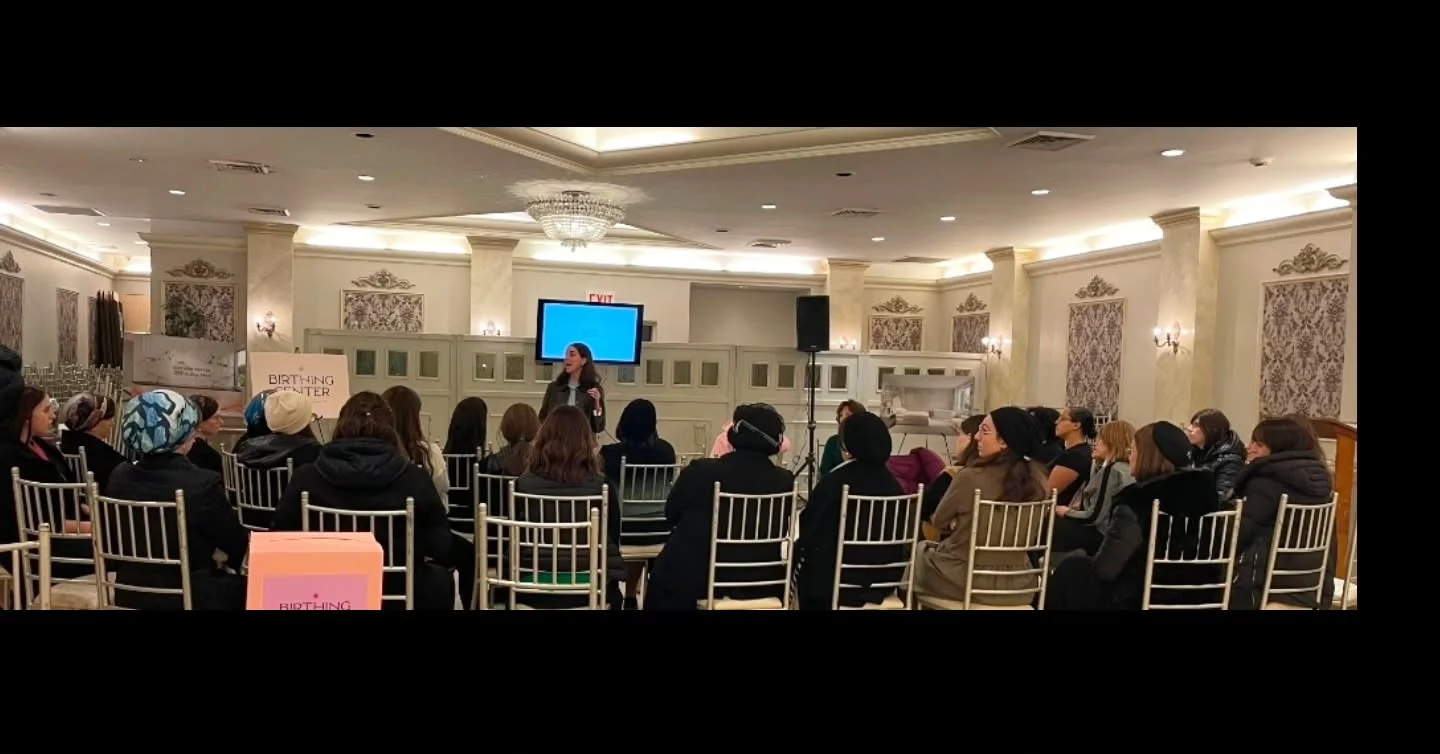
Work backward from about 36 weeks. A seven-week series needs to start by about 29 weeks to finish on time, while a weekend class can fit much later. Online and self-paced classes are also available if your schedule is unpredictable. At Birthing Center Long Island, we offer small-group and private classes at our Hewlett center.
How to Count Back From Your Due Date
The simplest way to plan is to start from your due date and work backward:
- Find your finish line. About 36 weeks is roughly four weeks before a 40-week due date.
- Subtract the class length. A six-week weekly series needs to begin about six weeks before your finish line.
- Sign up early. Register several months before your due date, so a full class doesn't push you later than you'd like.
For example, with a due date of June 30, 36 weeks falls around June 2. A six-week series would need to start by about April 21, and you'd want to be signing up by around March, while you're still in the second trimester. If you're attending in person, also check whether sessions run on weeknights or weekends, and plan for travel time to the class.
Breastfeeding, newborn care, and CPR classes
Different classes have different purposes, so their best timing differs too. Lamaze suggests a breastfeeding class at 28 weeks or later, ideally after your childbirth class. The CDC encourages learning about breastfeeding before your delivery, including taking a breastfeeding class. The American Academy of Pediatrics recommends that parents and caregivers take a CPR class, and a newborn care class fits naturally in the same stretch. None of the sources we reviewed sets a required week for these, so the practical goal is simply to finish them before your baby is likely to arrive.
Do Childbirth Classes Help? What the Research Says
The Office on Women's Health describes childbirth, breastfeeding, infant care, and parenting classes as "great ways to lessen anxiety and build confidence." The research behind that is encouraging, but not definitive:
- A 2025 meta-analysis in the European Journal of Midwifery pooled 31 randomized trials with 1,116 pregnant women. Antenatal education was linked to greater confidence about giving birth, less fear of childbirth, higher vaginal birth rates, and lower cesarean rates. The authors cautioned that differences between studies and potential bias limit how far the results can be generalized.
- An earlier Cochrane review (2007) of nine trials with 2,284 women found a lack of high-quality evidence. It concluded that the effects of general antenatal education "remain largely unknown."
In short, many families find classes reassuring and useful, and newer research points in a positive direction. A class can't guarantee a particular kind of birth.
Preparing for a Birth Center Birth
If you're planning to give birth at a birth center, try to time your class so you still have several prenatal visits ahead of you afterward. That way, anything the class raises can become a conversation with the midwives who will be with you in labor.
Classes often fall in the same stretch of pregnancy when prenatal visits become more frequent. The Office on Women's Health describes a typical schedule as monthly visits through week 28, twice a month from 28 to 36 weeks, and weekly from 36 weeks until birth. Bring what you learn in class to those visits with your midwife. A question raised at 30 weeks has time to be answered well before labor begins. If you'd like to understand how midwifery care works across pregnancy, birth, and postpartum, that's a good place to start.
To see which classes we offer and what each one covers, visit our page on childbirth education classes on Long Island. If you're also planning to have continuous labor support from a doula, consider inviting them to a session as well.
Have questions about preparing for birth?
We're happy to talk through classes, prenatal care, and what birth center birth looks like, whether you're early in pregnancy or already in your third trimester.
Choosing a Class on Long Island
Many hospitals, birth centers, and independent educators across Long Island offer childbirth classes (sometimes called birthing classes), with different formats, schedules, and approaches. Whatever you choose, the Office on Women's Health advises making sure the instructor is qualified.
Questions to ask before you enroll
- When does the class start and end, and will I finish by about 36 weeks?
- Is it a weekly series, a weekend class, online, or private?
- How many people are in each class?
- What training or certification does the instructor have?
- Does the class reflect the setting where I plan to give birth?
- Can my partner or support person attend every session?
- What happens if I miss a session or my baby arrives early?
- What does it cost, and does my insurance cover it?
Cost and insurance
Prices and coverage vary by provider and plan. In New York, the Department of Health's Medicaid Perinatal Care Standards list childbirth education classes among the preventive health services that Medicaid Managed Care plans are required to provide. If you have private insurance, ask your plan directly whether childbirth classes are covered. Our guide on how to check your maternity benefits walks through the questions to ask. You can also find details in our insurance information.
If You're Starting Later Than Planned
If you're already in your third trimester and haven't taken a class, it's still worth doing. A weekend class or a private session can cover the essentials in much less time than a weekly series. Tell the instructor how far along you are so they can focus on what matters most. Ask your midwife which topics to prioritize for your pregnancy.
For dates and details, check our upcoming classes and events.
A Note From Our Midwifery Practice
Families sometimes worry they've waited too long, or that they're overpreparing by signing up early. There's no single right answer to when to take childbirth classes. The goal is simply to arrive at labor knowing what to expect, with a support person who feels ready too. Signing up early and attending in the late second or early third trimester makes that easier.
A class is one part of preparation, not the whole of it. The conversations you have with your midwives at each prenatal visit matter just as much. Every pregnancy is different, so treat the timeline in this article as a starting point and adjust it to fit your health, your schedule, and the kind of birth you're hoping for.
Ready to prepare for birth with us?
Learn about our small-group and private childbirth classes in Hewlett and how they fit into your care.